
Your Healthcare Facility's Data Shouldn't Live in a Spreadsheet
dRofus connects room data, equipment requirements, and BIM models in one structured platform, so every stakeholder on your healthcare project works from the same source of truth, from planning through operations.
.avif)
.png)

.avif)

.avif)
Countries reached
across healthcare, higher education, and government projects.
Planning time reduction reported
by users who replaced Excel workflows.
AECO Users
coordinating projects in dRofus today.
One Connected Platform for the Entire Healthcare Building Lifecycle

Single Source of Truth for Regulatory Standards
All data, requirements, and standards live in one place. Everyone works from the same up-to-date information.

Standards Consolidation
Define your room templates once. Updates propagate automatically across every room built from that template.


Real-Time Design Validation
Your team can check what was designed against what was required, without waiting for a formal review or meeting.

Equipment Planning
Track medical equipment needs and placement from early planning to installation.
Healthcare Projects Run on Fragmented Data
Your room requirements are in a spreadsheet. Your equipment lists are in another. Your BIM model is in Revit. And when any one of them changes, the other two are already out of date.
Your project team is spending hours each week reconciling versions, chasing down the latest file, and trying to answer the question that should never have to be asked: what's the current source of truth?
dRofus Connects Everything Your Project Depends On
When your requirements, room data, and BIM models live in one structured platform, the reconciliation work disappears. Every stakeholder works from the same up-to-date information. Misalignments get caught early, when they're still cheap to fix, not during construction when they trigger change orders.
The longer your data stays fragmented, the more expensive the fix becomes. dRofus is the fix.
Healthcare Teams Trust dRofus to Get It Right






BHS Seven Pines MOB-I & II
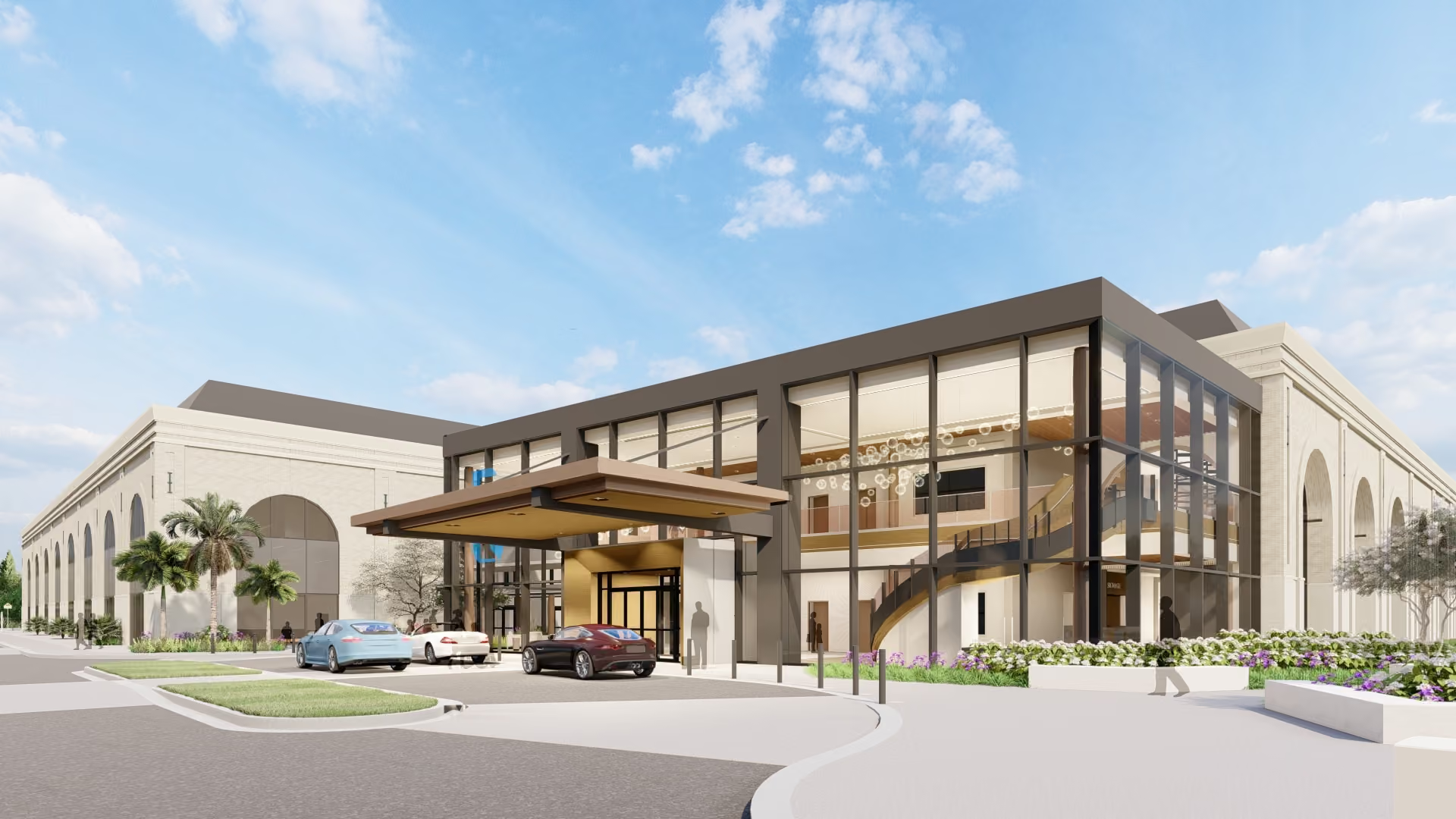
From Fragmented Data to a Connected Project in Four Steps
Structure Your Requirements
Load your space program, clinical standards, and equipment data. Define your data structure to match how your team actually works.
Connect Your Tools
Integrate with Revit, Archicad, and Autodesk Construction Cloud through pre-built connectors. Your existing BIM workflow stays intact.
Coordinate Across Team
Owners, architects, engineers, and contractors all access the same live data. Changes update across the platform so every stakeholder stays aligned.
Handover Complete Data
At project completion, facilities teams inherit structured, usable data from day one of planning, with no rebuilding and no gaps.
dRofus FAQs
Got questions about how dRofus fits into your healthcare project workflow? Here are the ones we hear most often.
Yes. dRofus integrates with Revit, Archicad, and Autodesk Construction Cloud through purpose-built connectors that sync data between your models and your requirements in real time. It also supports IFC and other openBIM standards for teams using other toolsets. Your existing BIM workflow doesn't need to change.
That's one of the most common reasons healthcare owners choose dRofus. Stakeholders without BIM experience, including facility managers, clinical planners, and project owners, can access, review, and update project data directly in dRofus without ever opening a model. The platform sits alongside your BIM workflow, not inside it.
Most teams are working in dRofus within a few weeks. Our onboarding team works alongside yours to configure your data structure, connect your BIM tools, and import your existing room and equipment data. You don't need to start from scratch.
Existing data can be imported directly into dRofus, so the work your team has already done doesn't get thrown away. Once it's structured inside the platform, it connects to your BIM models and stays current as the project evolves.
The room data, equipment records, and project standards captured in dRofus carry through to operations without needing to be rebuilt. Facilities teams inherit a structured, complete data set from day one of planning, which supports maintenance planning, asset tracking, and compliance documentation over the life of the building.
Every Day Without Structured Data Is Another Day of Preventable Rework
Healthcare facilities are complex. The projects that build and maintain them don't have to be. See how dRofus helps your team stay aligned from planning through handover, with data you can actually trust.